At an intersection controlled by a yield sign, a driver must
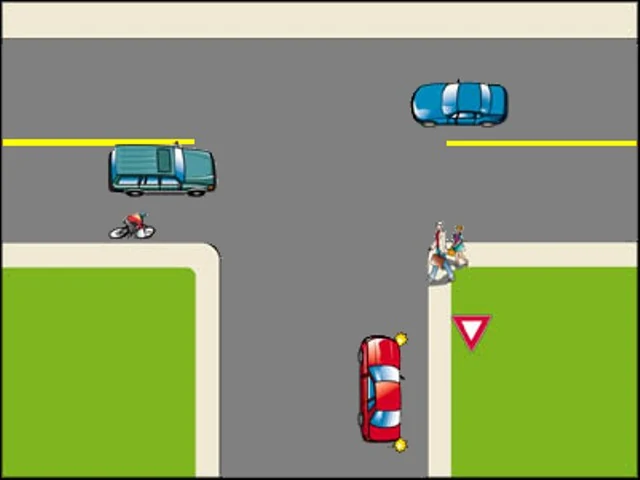
- yield to all traffic, including cyclists and pedestrians ✓
- come to a full stop
- yield to cars on the through road
- yield to pedestrians on the through road
Answer: A. yield to all traffic, including cyclists and pedestrians
At a yield sign, you must yield to all traffic using the through road, including cyclists and pedestrians.
Why this is the answer
The handbook explains that a yield sign means you let traffic on the through road have the right-of-way. You can enter the intersection without stopping only when there are no pedestrians, cyclists or vehicles on that road. If traffic is there, you slow down, stop if needed, and wait for a safe gap. That matches yielding to all those road users, not just cars or just pedestrians.
Why the other answers are wrong
- B. come to a full stop — A full stop is what a stop sign requires; at a yield sign you may enter without stopping when the through road is clear.
- C. yield to cars on the through road — Yielding only to cars on the through road is too narrow, because the handbook also names pedestrians and cyclists among those you must wait for.
- D. yield to pedestrians on the through road — Yielding only to pedestrians on the through road misses the vehicles and cyclists that the handbook says you must also let go first.
Remember it
Picture the through road as having the first turn: scan for people, bikes and cars before you move.